Green Front Rug Guide Addendum: FAQs, Policies + Rug Terminology
Pile on the Discovery: Navigating Rugs at Green Front
You’re now a rug guru. With this new expertise, you’re ready to hit your local Green Front location and find the rugs that speak to you.
We showcase rugs from as far away as India and Iran. Our rug pads are sourced right here in America. The very best designs are always in stock, whether you’re looking for something durable and pile-constructed or super-soft to greet you as you rise from bed.
What You’ll Find in This Rug Guide Addendum
- Where do I start when shopping for rugs at Green Front?
Use quick tips to navigate rugs in our stores. - What is the Green Front rug return policy?
Review timelines, store credit details and restocking fees. - Do you have rug pads, delivery options or resizing help?
Learn what’s available in-store and what to ask a sales associate. - What do common rug terms mean?
Explore simple definitions for rug terminology like Oushak, warp and weft, and pile.
Visit Green Front Rugs in Farmville, VA
You’re now a rug guru. With this new expertise, you’re ready to hit your local Green Front location and find the rugs that speak to you.
We showcase rugs from as far away as India and Iran. Our rug pads are sourced right here in America. The very best designs are always in stock, whether you’re looking for something durable and pile-constructed or super-soft to greet you as you rise from bed.
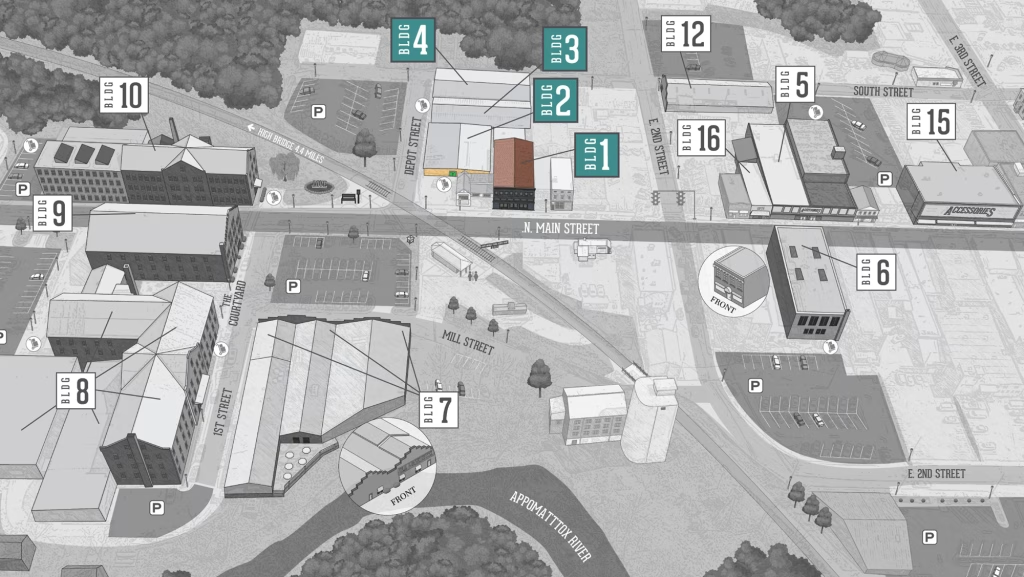
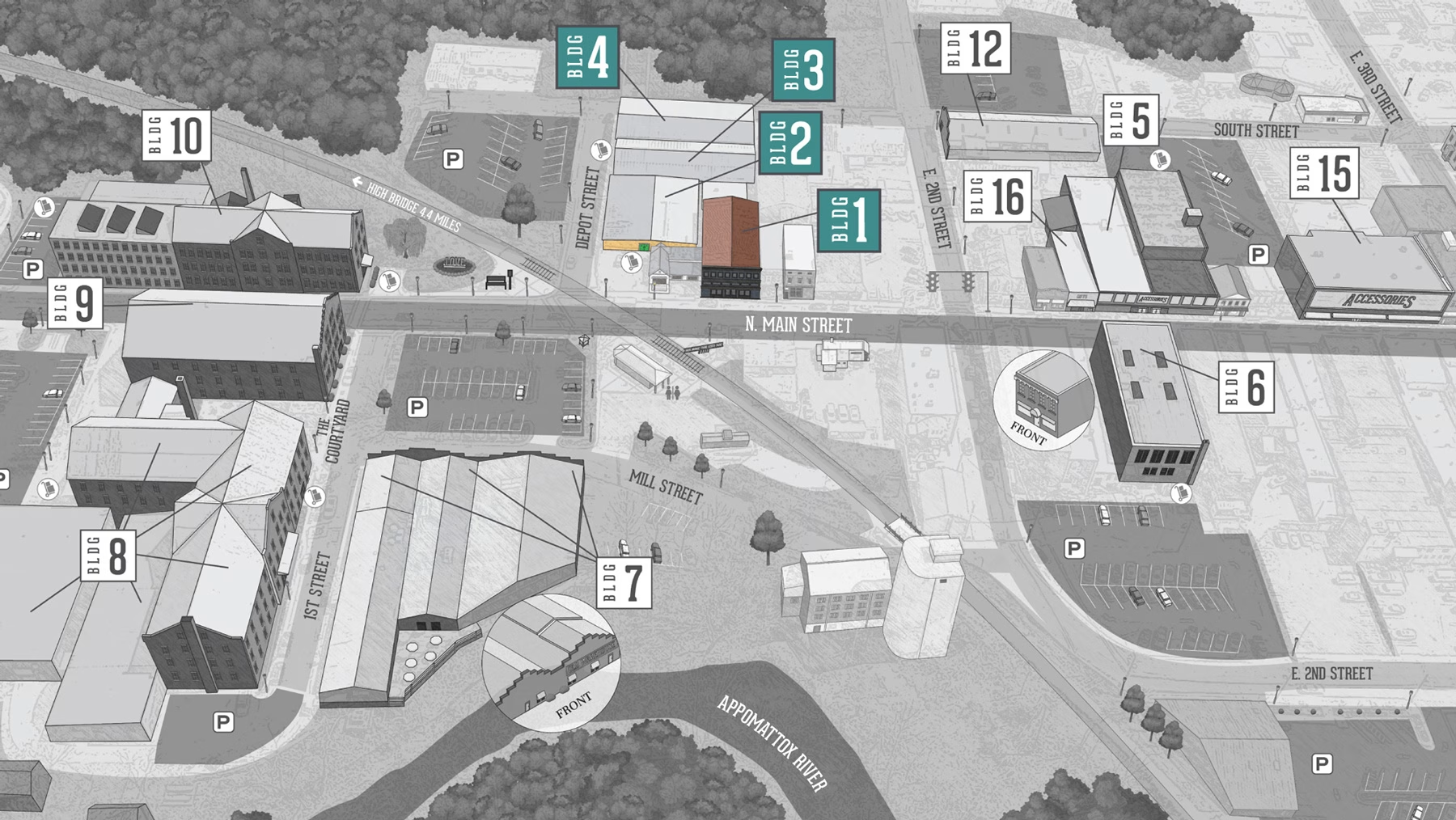
At our Farmville flagship store, Green Front rugs are in Buildings 1-4. You’ll also find rugs in Raleigh, NC, and Northern Virginia on the showroom floor.
Green Front’s Rug Return Policy
Within 30 days of purchase, you may return your rug for a store credit in the full amount or you can receive a refund, less a 15% restocking fee. No exchanges after 30 days.
Rug Buying: Frequently Asked Questions
I’m ready to buy a rug. Where do I start?
The best place to begin is with this Green Front rug guide. Headed to our Farmville store? Grab a copy of our field guide to help you chart your path from building to building. You can find hand-knotted rugs, jute rugs, cow hide rugs and more in Buildings 1-4.
What are the best rugs for kids? Do you have pet-friendly rugs?
Durability is the name of the game for high-traffic areas. If you’re searching for kid-friendly rugs or the best rugs for pets, choose materials that can handle dirt, spills and everyday wear. 100% wool is widely considered one of the best rug materials for pets and kids thanks to its natural stain resistance and long-lasting performance.
What is a rug pad? Do I need a rug pad?
A rug pad adds cushioning, prevents slipping and helps extend the life of your rug by reducing friction and wear. In addition to improving comfort underfoot, rug pads protect both your flooring and your investment. Custom-cut rug pads can be ordered in Buildings 1-4.
Is this rug available in a different size?
A lot of our rugs are available in a variety of rug sizes, but some are one of a kind. It’s best to ask a sales associate.
How do you clean a wool rug?
Wondering how to clean a wool rug? Try to avoid using a vacuum on any of the handmade rugs. Opt instead for spot cleaning with soap and water or using the vacuum’s hardwood attachment for a gentler option. Whenever possible, professional cleaning is always recommended.
Do you have any custom rug sizes available?
While we do not currently order fully custom rugs, we can cut certain rugs down to better fit your space. If you’re wondering how to make custom rugs work in your home, resizing an existing rug can be a practical and cost-effective solution.
Do I need the rugs delivered or can they fit in my car?
Depending on the size of the rug you are purchasing, you may be able to take your rug home with you the same day. Delivery options are available for larger rugs.
Green Front Rug Guide: Rug Terminology
Want to sound like a rug expert? Commit these terms to memory and your interior designer will be very impressed.
ABRASH
(Pronounced “uh-BRASH”) Subtle variations in wool color and tone throughout a rug, often seen in hand-knotted and abrash rugs. These natural shifts occur during dyeing and give the rug depth and character.
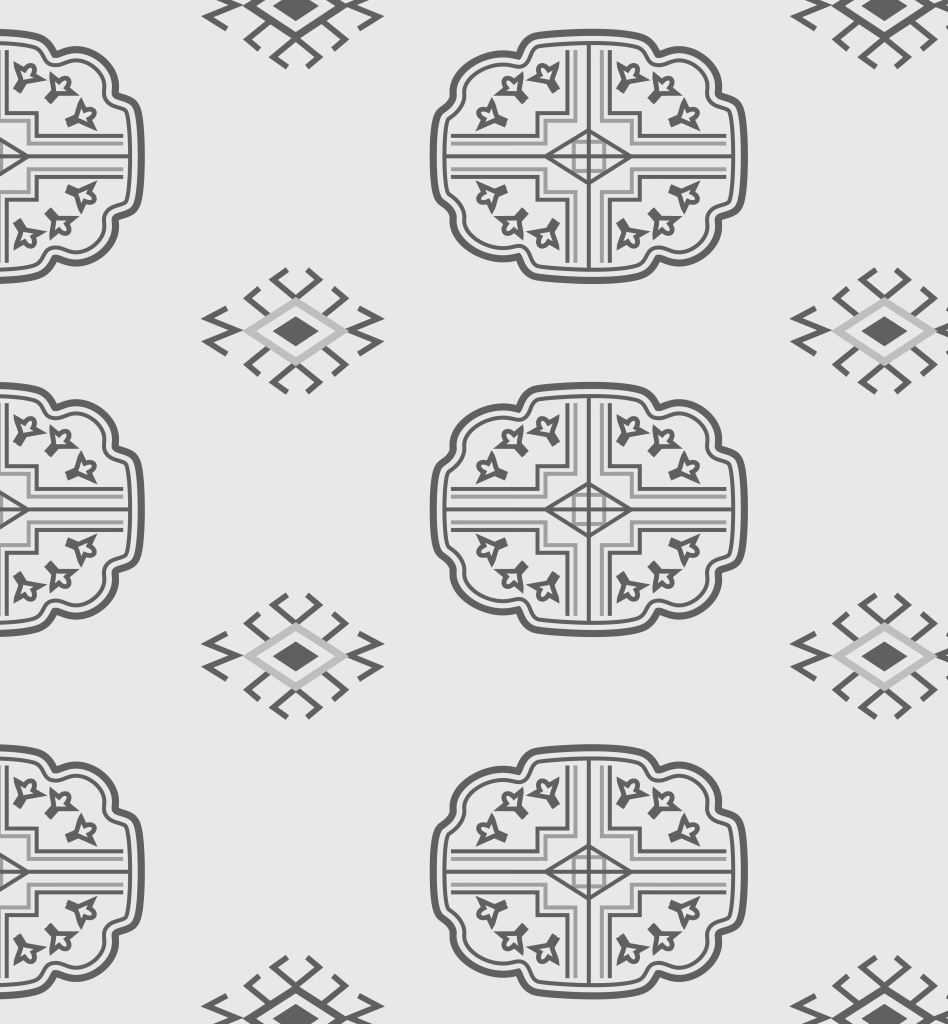
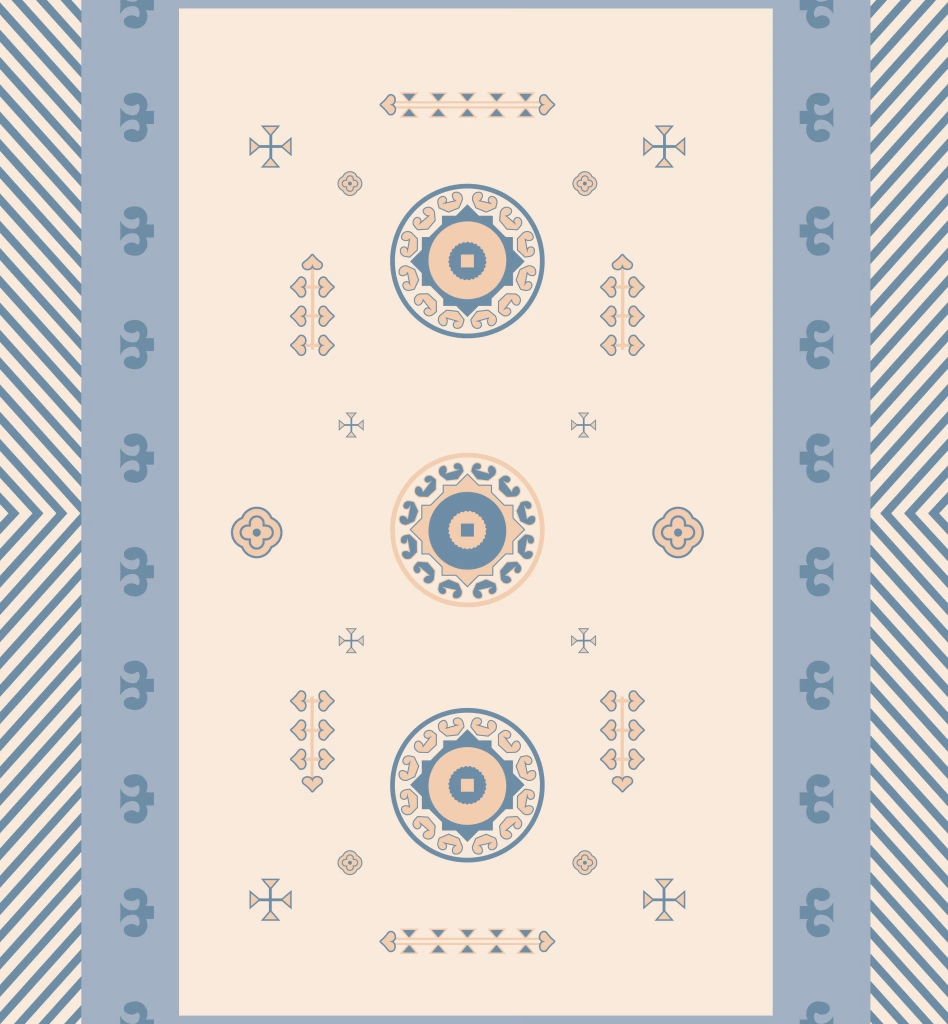
BOKHARA (FIGURE A)
(Pronounced “bo-KAH-ruh”) A bokhara rug pattern features rows of guls (repeated medallions) and geometric designs.
FLATWEAVE
Flatweave rugs include dhurrie rugs and kilims. These rugs don’t have a pile, hence the moniker “flatweave.” Kilim rugs usually have a tribal look. They tend to be lighter, flexible and often reversible since the pattern is the same on both sides of the rug.
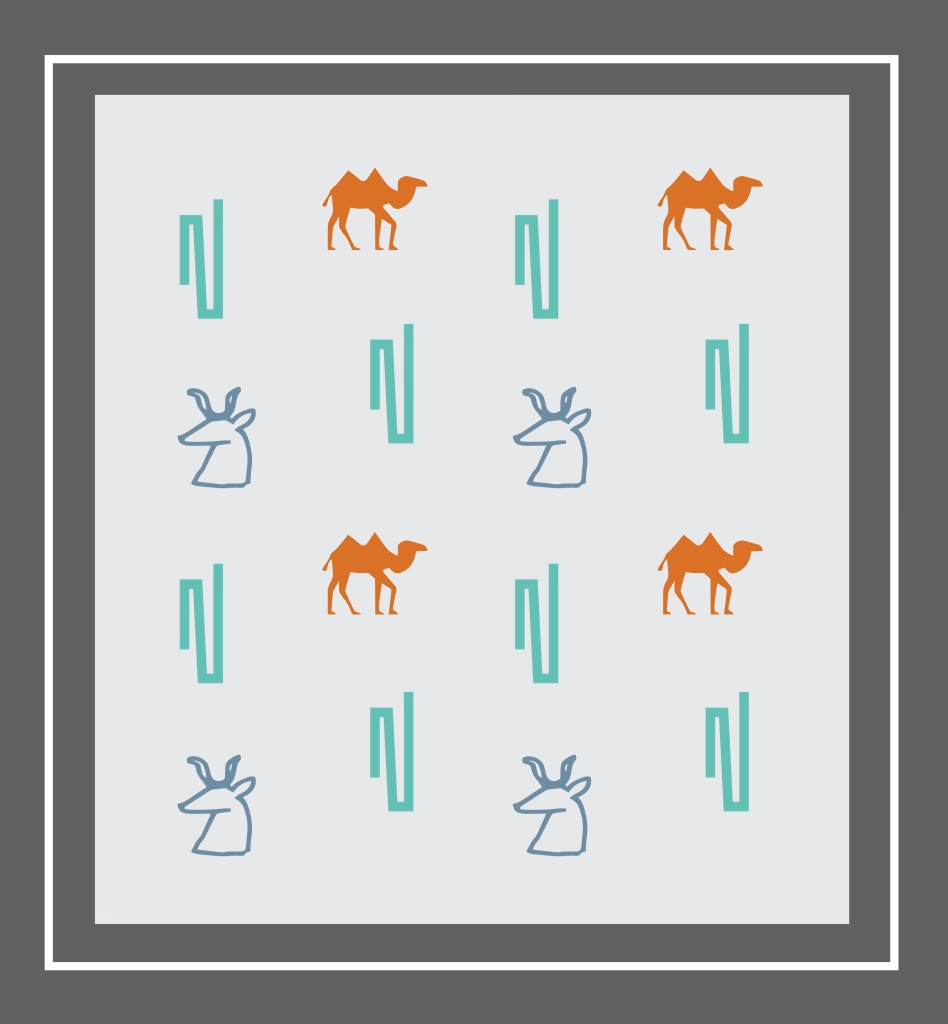
GABBEH (FIGURE B)
(Pronounced “gah-BAY”) Gabbeh rugs typically feature a playful quality, bright colors and may include images of animals.
GARAJAH
(Also spelled Garaja; pronounced “Ga-RAH-jay”) Garajah rugs feature traditional Persian rug designs with a repeating center medallion.
HAND CARVED, HIGH & LOW
(specialty finish) Once artisans have finished making a rug by hand, they will trim around the silk area so that the silk pops up and the wool areas are lower. This process adds form and depth.
HAND-KNOTTED (FIGURE C)
A labor intensive rug-making method involving a vertical hand-knotting loom. Knots are hand-tied individually onto strings stretched onto the loom.
HAND-TUFTED
This construction method takes a lower degree of skill than hand-knotting. Handtufting involves inserting yarn through a woven base to create a pile. The pile can be looped or cut but always attached with an adhesive backing. Use hand-tufted rugs in low-traffic areas to get the maximum life from the rug.
HERIZ
(Pronounced “ha-REES”) Heriz rugs feature traditional patterns with bold, geometric designs, often highlighting a large and dominant center medallion.
KAZAK
(Pronounced “kuh-ZAK”) A traditional design originating in the Caucasus Mountains, Kazak rugs include geometric designs, angular patterns and medallions.
KIRMAN
(Pronounced “ker-MAHN”) A kirman rug is an ornately patterned rug, often with a central medallion, frequently sheared down for a vintage effect.
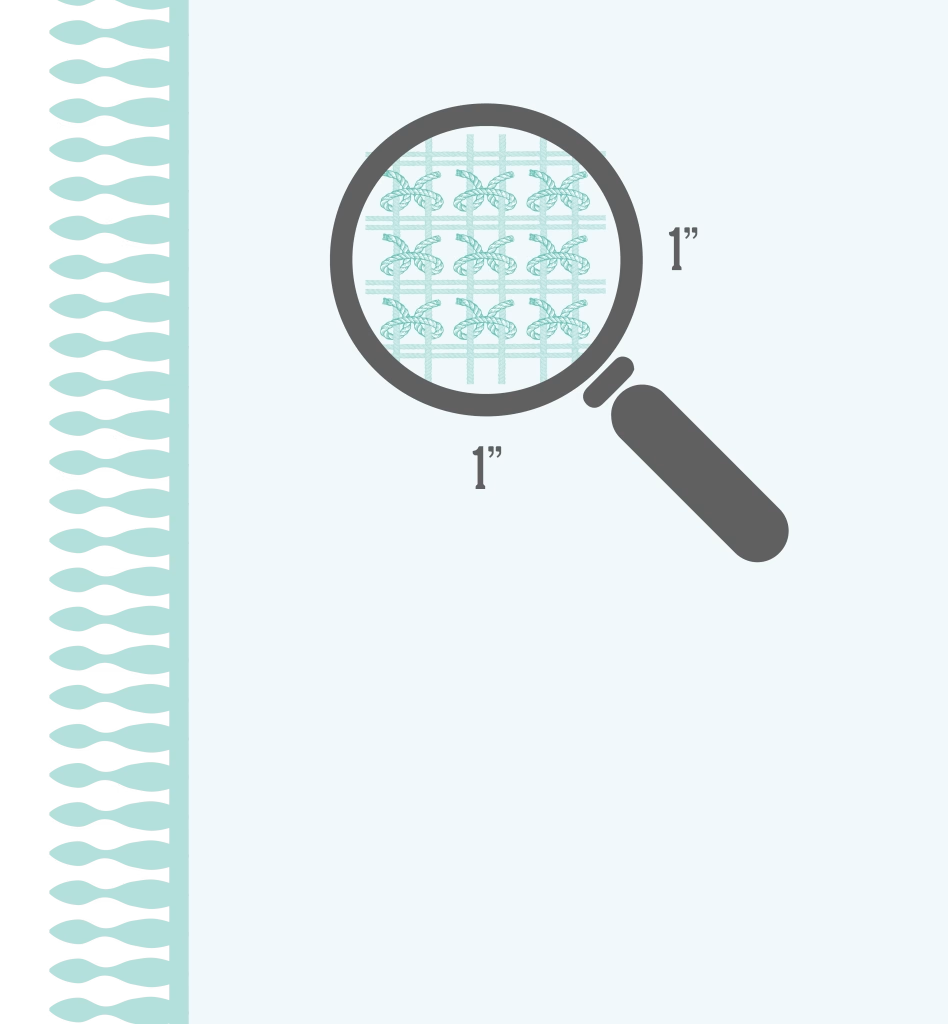
KNOTS PER SQUARE INCH (FIGURE D)
This refers to the density of knots within each square inch of rug. The more dense the knots, the more durable the rug or the ability to create a more intricate design.
KOTON (FIGURE E)
(Pronounced “KOH-ton”) A design originating in China featuring circular motifs.
LAYERING RUGS
The design technique of placing multiple layered rugs on top of one another to create depth, texture and visual interest. Popular approaches to rug layering include styling a layered jute rug as a neutral base or adding a layered cowhide rug on top for contrast and dimension.
MACHINE-MADE
Machine-made rugs are produced more quickly than hand-knotted rugs. Unlike handmade rugs, they are typically a polyblend rather than made from wool or silk. The speedier automated process produces less expensive rugs.
MAMLUKE
(Pronounced “MAM-uh-look”) A mamluke rug style features a central medallion and geometric border.
MEDALLION
A medallion rug features a central decorative motif — often circular or oval — that anchors the overall design. While the medallion is one of the most common elements in traditional rugs, no two medallion rugs are ever exactly alike.
OUSHAK (FIGURE F)
(Pronounced “ooh-SHACK”) Named after Usak, Turkey. Oushak rugs typically feature large-scale floral and geometric designs, often against a muted, natural background.
PATINA
A term for the unique characteristics an item takes on as it ages.
PERSIAN RUGS
Generally a blanket term referring to any number of rugs woven in Iran or surrounding areas. Iran Persian rugs often feature flowing, geometric designs and rich, vibrant colors.
PILE
Pile is the raised surface or nap of the rug. (Claim bonus points if you knew the word comes from the Latin pilus for hair!) A high-pile rug has longer, more plush fibers for a softer feel underfoot. A low-pile rug features shorter fibers that create a flatter surface and is often easier to maintain in high-traffic areas.
SANDBLASTED
(Specialty finish) A sandblasted rug is treated using a controlled finishing process that softens the fibers and creates a subtle, antique look with a gently worn appearance.
SILK WASH
(Specialty finish) A finishing process that gives wool fibers an enhanced sheen, increasing shine and helping the rug reflect light for a more luminous appearance.
TURKISH KNOT VS. PERSIAN KNOT
While both knots are tied on vertical foundation strings, the Turkish knot is a symmetrical knot — sometimes called a Ghiordes (Gordes) knot — commonly found in hand-knotted Turkish rugs. The Persian knot is an asymmetrical knot — sometimes called the Senneh knot — traditionally used in hand-knotted Persian rugs.
WARP AND WEFT
Warp and weft refer to the vertical (warp) and horizontal (weft) foundation threads of a rug. Together they form the structural base of rug construction, providing durability and shape.
WHITE WASH
(Specialty finish) White wash is used to fade out the design of a rug. Similar to antiquing, it subdues the design.
ZERO PILE
(Specialty finish) The pile is sheared down until there is no longer a nap. Even new rugs can have the character of a rug that’s been walked on for 100 years.